



About Our Pecans
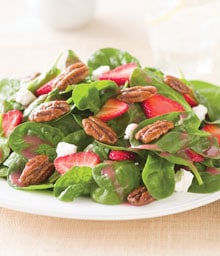
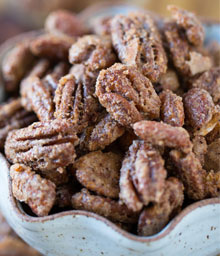
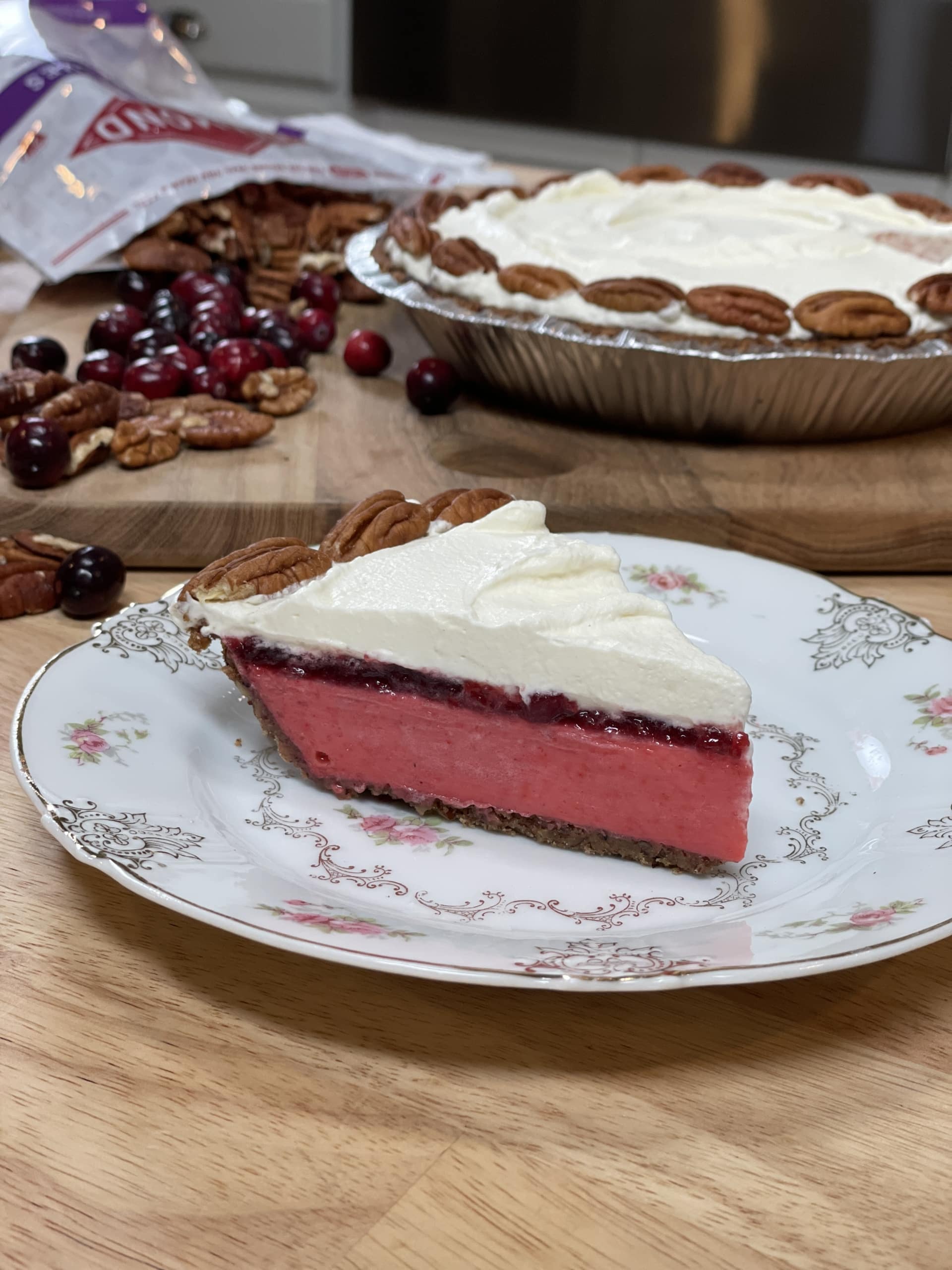
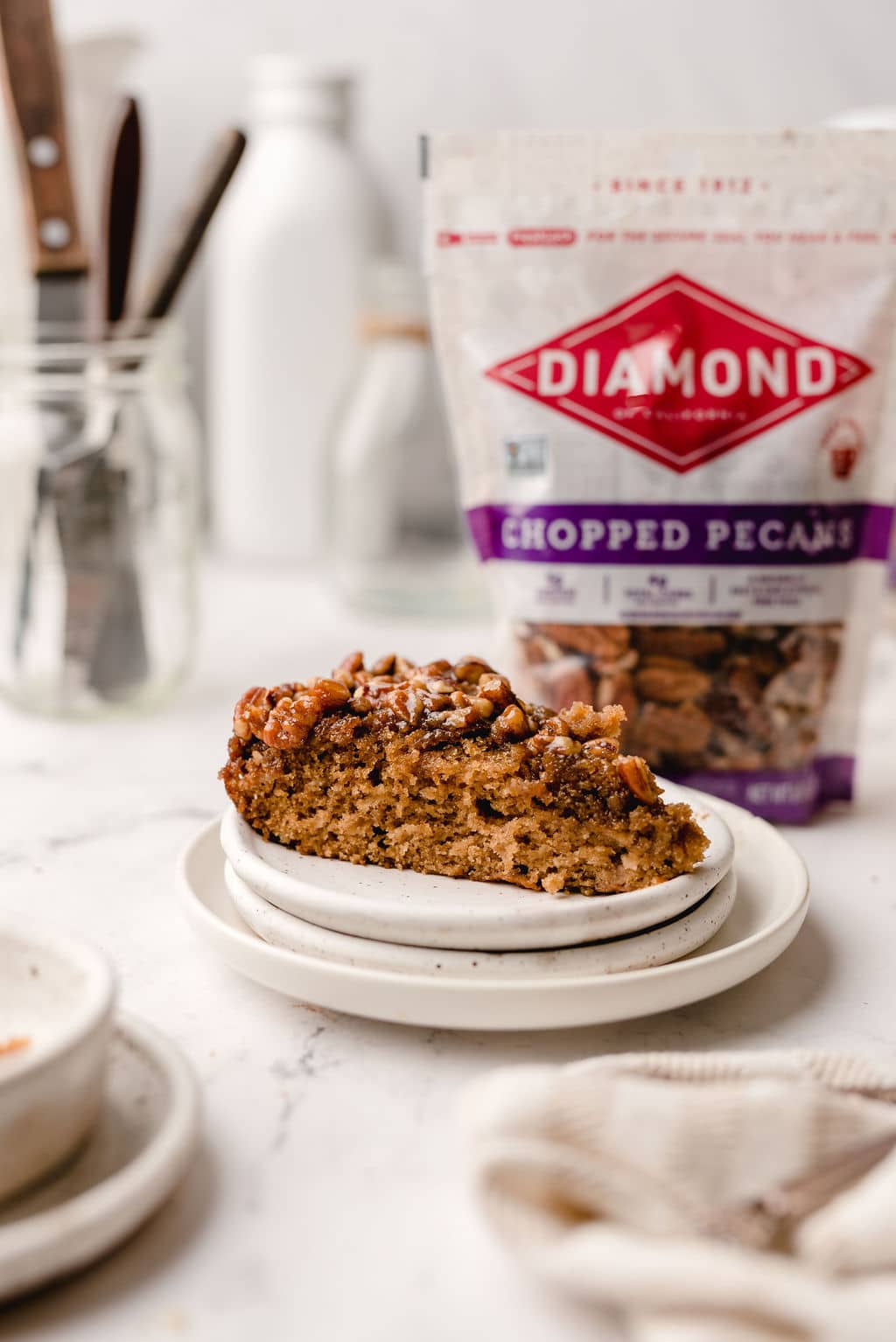
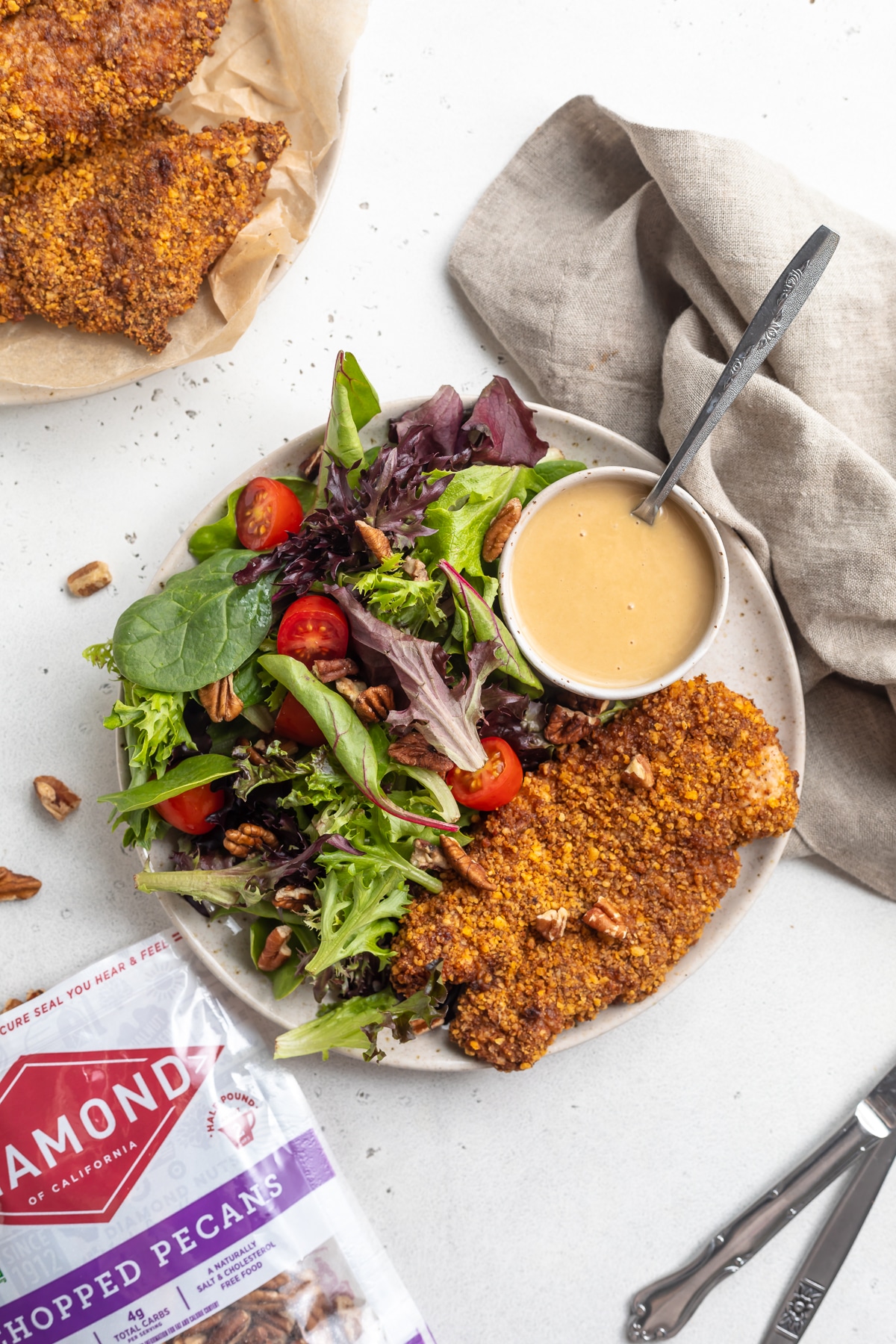
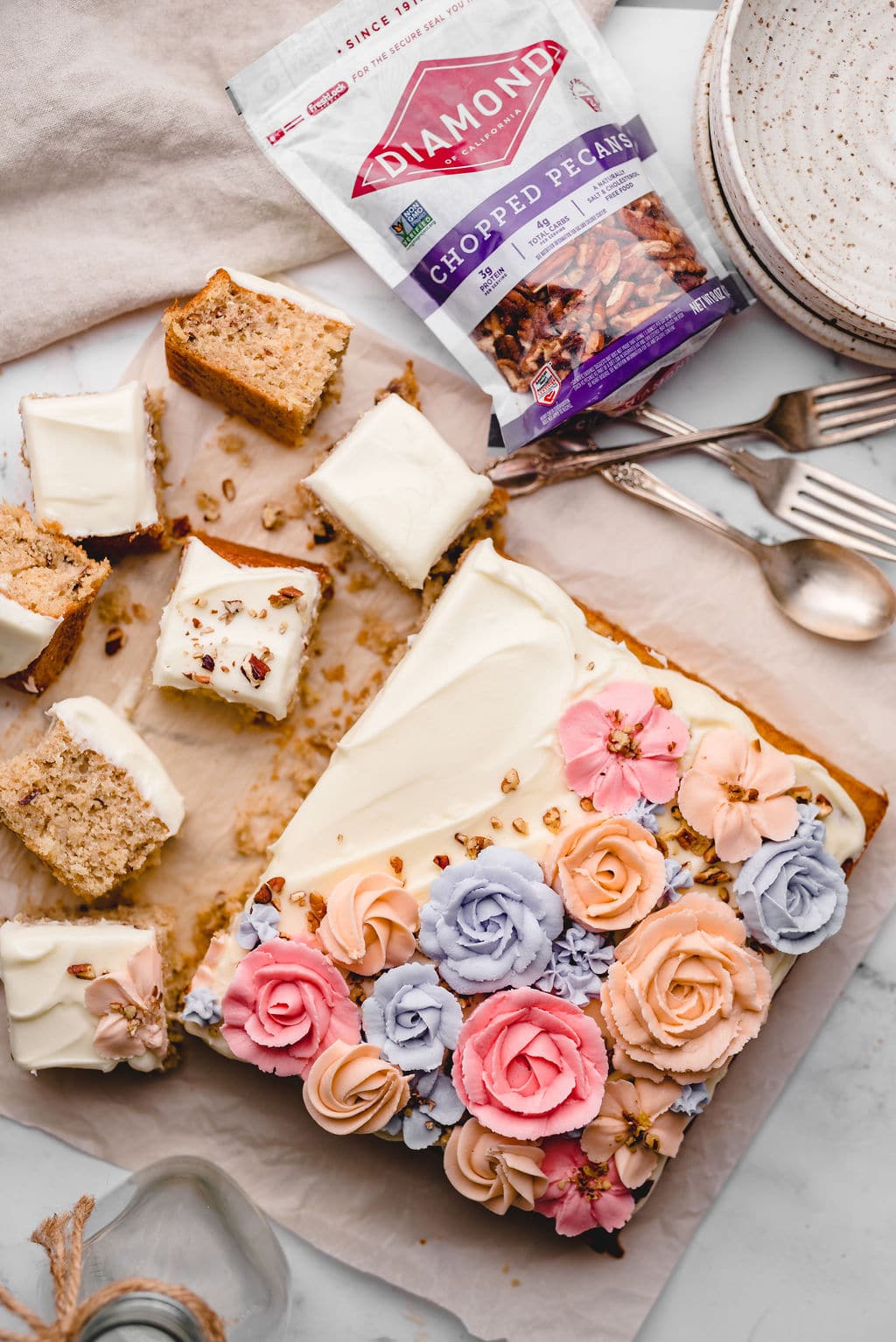
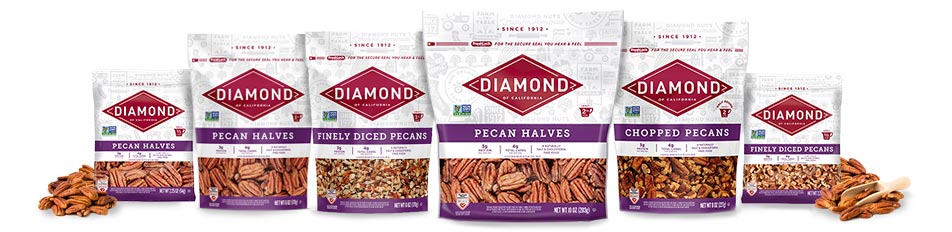
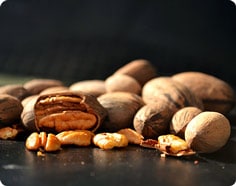
If there were a popularity contest for culinary nuts, pecans might come out on top! That’s why Diamond Nuts added pecans to our product offerings decades ago. Our original glazed pecans are a crowd pleaser for that irresistible sweet-salty combination that can be eaten plain or used in a variety of dishes both sweet and savory. And we’ve been innovating new ways to use pecans, like our chef-inspired nut coatings and our amazing nut pie crusts — chocolate, pecan, and our seasonal pumpkin spice flavor. To make sure our customers can enjoy our pecans in all the ways they want and need, we offer them in-shell, halved, chopped, and finely diced.
The Beginning of Diamond Nuts
The early 1900s was a time of great expansion for food production in the United States. In California, it was a particularly meaningful period in the history of the walnut, buoyed by new irrigation practices and technical advances making their way West from Yankee territory, as well as political action, like the “Good Government” reform movement.
Amidst all this progress, in March of 1912, a group of walnut growers became incorporated as the Central Organization of Walnut Growers Associations of California. The newly formed group (known as the CWGA) got to work quickly to form a board and set all-important shelling standards and pricing policies. In July of that year, the Diamond brand was born—with a strong emphasis on high quality. In fact, separate brands were established to sell nuts of lesser quality. This standard is one of the foundational tenets of the Diamond brand customers know and love today.
Homegrown success
The World War I era had a profound impact on American agriculture and a particularly interesting one on California walnuts. At the time, walnuts weren’t a basic need but a luxury. However, because foreign production had ground to a halt, domestic nut production exceeded foreign imports. By war’s end, the winds began to change, and the CWGA pivoted in order to keep its advantage. The idea was to differentiate Diamond’s premium-grade nuts from cheaper, lower-quality foreign imports. In a wildly ambitious marketing move, Diamond decided to literally brand individual walnuts. From inception to fruition, the effort took 10 years.
During this time, advertising took off, largely due to the industrious, enthusiastic efforts of CWGA General Manager Carlyle Thorpe. Thorpe, to the chagrin of some board members, pressed for national advertising, eventually garnering the attention of news organization Pathe Weekly, which made a film about the California walnut industry. Doubling down on its efforts, the CWGA published a recipe booklet and a beautifully illustrated 98-page booklet detailing cultural practices, processing, and production—further elevating the Diamond brand.
We got cracking!
It was a good time to be in the nut business. In 1919, CWGA purchased a $5,000 cracking machine that opened up a new market for retail, putting shelled nuts into the willing hands of consumers for the first time. Fancy new air-tight packaging literally and figuratively sealed the deal. In 1920, company news announced the construction and purchase of the association’s first “Big Fire-proof Building,” aka its shiny new headquarters in Los Angeles, a big milestone, as this was a first venture into property ownership rather than renting space.
A little over 30 years later, the CWGA felt growing pains yet again. This time, the location of the headquarters was up for grabs. Production on walnut farms in the northern part of the state had exceeded that of the south, where the CWGA was conceived. The north seemed like a natural choice at this point in time, but to ensure ultimate fairness between growers in the north and the south, the cooperative enlisted a third-party consulting firm to help determine the best location. The results showed it was time to bid adieu to Los Angeles. The cooperative was moving on up to Stockton. On August 23, 1956, a gala of epic proportions commemorated the opening of the plant, with nearly 5,000 people in attendance.
In 1962, another celebration was in order: Diamond’s Golden Anniversary. On the heels of celebration and continued success, the cooperative offered investment opportunities to its thousands of members. Between 1963 and 1973, walnut production nearly doubled. If the CWGA were a recording artist, the mid-1900s was its season of platinum hit after hit.
Growing up Diamond
It would be hard to repeat the milestones and growth of the CWGA’s first 50 years. Accordingly, the 1960s and 1970s were the rational children of the prior decades’ experimental, passionate progenitors. These decades brought more scientific and technological advances to increase yield, lower costs, and remain not only competitive but also maintain those all-important original standards for quality.
As with business and industry all over the country, the deep recession of the 80s was a mighty headwind for California’s walnut growers and the Diamond brand. But with a strong foundation of its first 70+ years of success and resilience, the company came through relatively unscathed. The 90s and 2000s introduced a brave new world for the walnut industry: government regulation and genetic research.
Diamond Nuts today
The 21st century ushered in a new paradigm. The old ways of focusing on company growth gave way to a more intimate connection with customers. For Diamond, this was a natural progression more so than a sudden or uncomfortable change. Customers had long been loyal to the brand, and as communication between brands and consumers became the norm via social media, the emotional component of the brand became all the more apparent. Grandchildren sent messages saying how Diamond was the nut their grandmother used in her famous holiday cookie recipe. Home cooks posted photos of beautifully executed nut rolls. The feeling of appreciation was, and is, mutual.
Cultural shifts have also played a role in the company’s evolution. A newfound focus on convenience and wellness has compelled an array of new product offerings, like snacking walnuts, pie crusts, and nut coatings. True to form, Diamond has risen to the occasion to deliver fresh, healthy products that meet customers where they are, further establishing trust in the brand.
Since 1912, Diamond has been building on a foundation of passion and innovation. Our history has shown that we value a balanced relationship between grower-directors and management and that we honor an entrepreneurial spirit of adaptivity that keeps us moving forward. Above all, we are a company that knows quality is our most valued possession.